
The brutally simple rule for choosing short copy vs. long copy
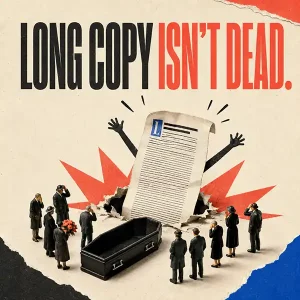 Every few months, the internet holds another funeral for long-form sales letters. The pallbearers have 14-second attention spans. And somebody from TikTok is livestreaming the whole thing vertically.
The eulogy always sounds convincing: Nobody reads anymore. Keep it short. Add a button. Move on.
There is just one awkward problem.
Long sales letters keep making money.
But…
So do short ones.
The real question is not, how long should my sales letter be? It is, how much uncertainty must I remove before the right buyer feels safe saying yes?
That one shift changes everything. By the end of this article, you will have a four-part test you can use before writing a single headline. It will tell you when short copy is enough, when long copy is doing necessary work, and when your 4,000-word masterpiece is simply wearing out the reader’s patience.
|
People do not hate long copy. They hate copy that wastes their time. |
The Short-Copy Trap
Picture Marcus, a leadership coach with a strong program and a strong fear of looking pushy.
He sells a $3,000 program for newly promoted managers. The offer requires time, money, trust, and the uncomfortable admission that maybe being great at the job did not magically make someone great at leading people.
Marcus builds a sleek sales page. One headline. Three bullets. A smiling photo. A bright button that says APPLY NOW.
The page is beautiful. It is also silent on every question a serious buyer is asking.
- Will this work for my industry?
- What happens each week?
- Why is it worth $3,000?
- Who has used it?
- What if my calendar explodes?
- Is Marcus actually qualified, or does he simply own a flattering blazer?
The page gets attention. Then silence.
Marcus assumes the offer is wrong. The offer may be fine. His sales letter simply stopped talking before the buyer stopped wondering.
Now flip the situation. Marcus invites his warm email list to a $29, 60-minute workshop called The First-Time Manager’s Tough Conversation Script. They know him. They understand the problem. The promise is concrete. The risk is tiny. A short page can work beautifully.
Same expert. Same market. Different amount of buying friction.
That is the whole game.
Your sales letter should stop talking when the buyer stops wondering.
The 4D Copy-Length Test
Before you choose short or long copy, score the offer on four kinds of friction: Dollars, Doubt, Delay, and Difference.
 1. Dollars
How expensive does the decision feel? Not just the price. Include time, reputation, effort, and the cost of choosing badly. A $49 template may be low risk. A $5,000 coaching program is not. The more the buyer can lose, the more proof and explanation the page must earn.
2. Doubt
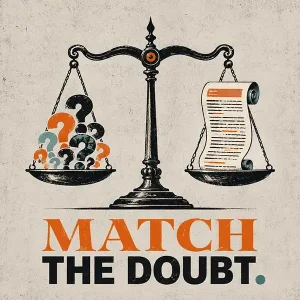
How skeptical is the reader? Cold traffic, bold claims, unfamiliar experts, and burned-before buyers create doubt. Doubt does not disappear because your button is orange. It disappears when your copy answers the question behind the hesitation.
3. Delay
How long until the buyer gets the result? Immediate outcomes need less explanation. Delayed or uncertain outcomes need more. If someone pays today but expects transformation over six months, your copy must build a bridge between purchase and payoff.
4. Difference
How easy is your offer to understand and compare with other offers? A familiar workshop with one clear result is simple. A new method, unusual mechanism, or category-creating offer takes more words because the buyer first has to understand what it is before deciding whether it is for them.
Give each D one point when it is meaningfully high.
- 0 to 1 points: Start short. The buyer already understands enough to decide.
- 2 points: Use a hybrid page. Keep the opening tight, then add proof, FAQs, and detail for readers who need it.
- 3 to 4 points: Go long. Your reader is not asking for fewer words. They are asking for fewer reasons to worry.
|
Copy should be as long as the doubt, and not one paragraph longer. |
When Short Copy Wins
Short copy is strongest when the offer arrives with trust already attached.
Use it when most of these are true:
- The audience already knows and trusts you.
- The offer is simple enough to explain in one clean sentence.
- The price and commitment feel low.
- The result is specific and arrives quickly.
- The traffic source already did the persuasion, such as a webinar, referral, live event, or detailed email.
- The action is a small next step, not a marriage proposal with a payment plan.
Short copy is not lazy copy. In fact, it often requires sharper thinking because every sentence must methodically carry the weight of the offer.
When Long Copy Earns Its Keep
Long copy works when the decision needs a guided conversation. It gives the reader enough room to move from What is this? to This makes sense to I can see myself doing this.
Go longer when the offer is expensive, complex, unfamiliar, requires high commitment, aimed at cold traffic, or fighting a pile of believable objections.
But let us be clear: long-form copy is not a wall of text built to trap a reader until Stockholm syndrome produces a credit card.
Good long copy moves. Each section has a job:
- Name the problem in the reader’s language.
- Make the desired outcome vivid and credible.
- Explain the mechanism, method, or process.
- Show proof that matches the claim.
- Answer the objections that block action.
- Present the offer and the next step clearly.
- Reduce risk without making ridiculous promises.
If a section does not increase desire, build belief, or remove friction, it is not long-form copy. It is trash.
|
Length is not the goal. Belief is the goal. |
The Accordion Principle
Here is the mental model I use: a sales letter should behave like an accordion.
The top stays compressed. The headline, lead, key promise, proof, and call to action should make sense to a ready buyer in a fast scan.
Then the page expands for the reader who needs more. Testimonials. Mechanism. Deliverables. FAQs. Guarantee. Comparisons. Details.
This lets decisive buyers move quickly without punishing careful buyers for doing their homework.
In other words, do not force every visitor to read every word. Make every word available to the visitor who needs it.
A 15-Minute Decision Before You Write
Before drafting your next sales letter, follow these steps:
- Write the offer in one sentence. If you can’t do that, length is not your first problem. Clarity is.
- List the five questions a smart, skeptical buyer would ask before paying.
- Score the offer with the 4D Test: Dollars, Doubt, Delay, Difference.
- Choose short, hybrid, or long based on the score, not your personal attention span.
- Draft the fast path first, then add only the sections that answer a real buying question.
- Cut anything that is repeated, vague, self-serving, or present because a funnel template told you to put it there.
Long Copy Is Not Dead. Bad Copy Is Just Loud.
Your buyer does not wake up hoping to read a 3,000-word sales letter. They also do not wake up hoping to make an expensive mistake.
If 300 words create enough clarity and confidence, stop at 300.
If the reader needs 3,000 words to understand the promise, trust the mechanism, believe the proof, and feel safe moving forward, give them 3,000 good ones.
The right sales letter is not short or long.
It is complete.
And if staring at a blank page is currently your least profitable hobby, CopyandContent.AI can help you build the right version faster. For example, you can enter your offer, audience, price, proof, and objections, then use the tool to create a tight short-form page for warm traffic and a deeper long-form version for cold prospects. You are not guessing at length. You are matching the message to the decision.
Visit CopyandContent.AI, build both versions, and test the one your buyer actually needs.
Because the market does not reward the shortest copy.
It rewards the clearest path to yes.
Did You Miss The Latest Posts?
- Why Most Entrepreneurs Make Product Launches Way Too Complicated
- A Great One-Time Offer Does Not Sell More. It Removes the Next Problem. [Podcast 315]
- Your Funnel Doesn’t Need More Promises. It Needs Receipts.
- The Tiny Checkbox That INSTANTLY Makes Your Funnel More Profitable – The Order Bump! [Podcast 314]
- The Video Sales Letter Compresses the Buying Decision with Customers [Podcast 313]
Facebook • Instagram • X • LinkedIn • Pinterest • Podcast • TikTok • YouTube • LinkTree

Leave a Reply