
I see a lot of people treat event / webinar registration like the finish line.
Someone signs up for the webinar. Downloads the report. Grabs the free training. Clicks the button.
And the business owner celebrates like they just won the Kentucky Derby.
But that excitement falls apart rather quickly.
Registration is not the end… Registration is the BEGINNING.
That tiny distinction is where most of the money quietly evaporates.
Not in a dramatic “the funnel is broken” kind of way. More like a leaky garden hose behind the shed. You don’t notice it at first. Then one day you look at your numbers and wonder why 1,000 registrants turned into 43 attendees, 4 buyers, and a huge bill on your Facebook ads account.
The event didn’t fail.
The follow-up did.
And here is where this gets interesting. The fortune has never really been in the list, the webinar, the free report, or the traffic source.
The fortune is in what happens after someone raises their hand to sign up.
That’s the part most people under build.
They spend weeks creating the webinar. Days tweaking the landing page. Hours arguing with themselves over the button color (like lime green somehow has magical conversion dust).
Then someone registers…
…And the pain begins.
The Biggest Lie About Events
“People show up because of the promo… They buy because of the follow-up.”
There is a common belief that if the event is good enough, people will show up, pay attention, and buy.
That sounds nice.
It is also dangerously incomplete.
People are busy. Distracted. Overcommitted. Half-interested. Curious but cautious.
They literally register while standing in line at the grocery store, waiting for soccer practice to end, avoiding an email they don’t want to answer, or pretending they are “researching” while really procrastinating.
They may want the result you offer.
But wanting something is not the same as remembering it… acting on it… or committing to it!
That is why follow-up matters.
Follow-up is not pestering people.
It is not “checking in” with a limp little email that sounds like it was written by a nervous intern trapped in a cubicle.
Follow-up is leadership.
It tells people what to do next. It reminds them why they cared in the first place. It builds urgency without fake pressure. It answers questions before they become excuses.
Your event creates attention. Your follow-up converts attention into action (and sales).
Without follow-up, you are depending on hope .
And hope is a terrible sales strategy.
The Registration Trap
Let’s say you run an automated webinar.
You send traffic to the registration page.
People register.
Great.
But then what?
If your only plan is “they will get the event link,” you do not have a follow-up funnel.
The registration moment is fragile. Interest is high, but commitment is low.
They have not trusted you yet.
They have not prioritized you yet.
They have not mentally connected your event as the solution to a problem they’re tired of lugging around like a fat toddler in a papoose pack!
That’s the job of follow-up.
Think of registration like someone walking into a store and saying, “I’m just looking.”
A bad salesperson disappears.
A pushy salesperson tackles them like a stalker.
A good salesperson guides without being pushy.
They ask the right question. They point out what matters. They make the next step feel obvious.
That is what your follow-up funnel should do.
The Follow-Up Gap
Here is a simple mental model:
- Traffic fills the room.
- The event delivers the message.
- Follow-up makes the decision easier.
Most businesses obsess over the first two and neglect the third.
In fact, most people just say they want “more traffic.”
100%. Traffic matters. You cannot sell anything to an empty room (even if your offer is good).
But more traffic will not fix a weak follow-up system.
It will only help more people fall through the cracks – faster.
This is what we call The Follow-Up Gap.
It is the distance between someone saying, “I’m interested,” and someone saying, “I’m in.”
That gap is where doubt lives.
It is where people forget.
It is where competitors show up.
It is where your prospect says, “I’ll come back to this later,” which is business-speak for “I’m 99% NOT going to buy.”
Your job is not to pressure people across this gap.
Your job is to build a bridge.
A Real-World Example
Imagine two coaches both offer a free training on the same topic.
Coach A has a strong registration page. Clean design. Nice promise. Good headline. People sign up.
Then they only get one confirmation email.
That is it.
Maybe they get a reminder fifteen minutes before the event. Maybe not. Maybe the tech gremlins ate that email.
Coach B has the same quality training, but a very different follow-up flow.
Right after registration, the prospect gets a simple confirmation email that restates the promise and tells them exactly what to expect.
A few hours later, they get a short message with a quick win related to the event topic.
The next day, they get a story about someone who struggled with the same problem and what finally changed.
Before the event, they get a reminder that does more than say “don’t forget.” It reconnects the event to the pain they want solved.
After the event, they get a recap, the key lesson, answers to common objections, and a clear next step.
If there is an offer, the follow-up does not just repeat “buy now” like a parrot with a Stripe account. It explains who the offer is for, who it is not for, what happens next, and why waiting might cost them.
Who makes more sales?
Coach B.
Not because Coach B is louder or pesters them.
Because Coach B leads better.
The best follow-up does not chase people. It escorts them to making a great decision.
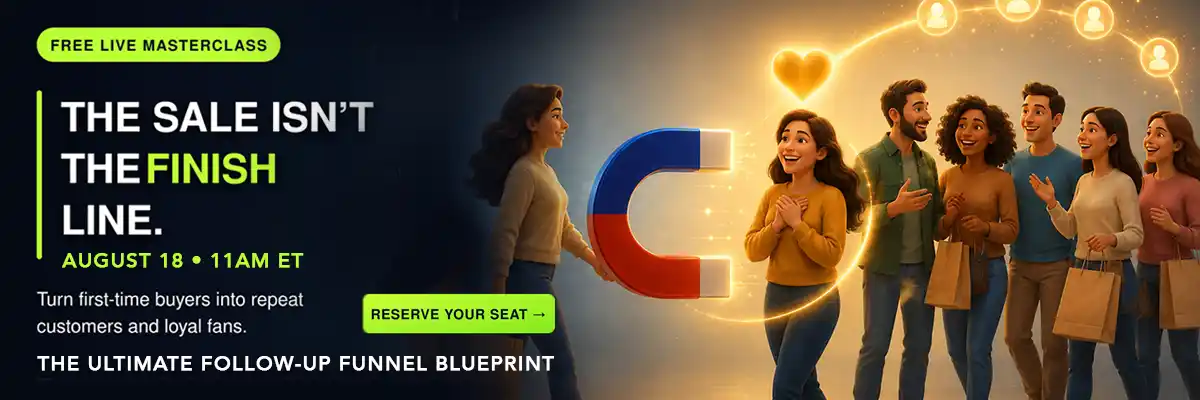
The First 24 Hours Matter More Than You Think
The most important follow-up starts immediately after registration.
Not three days later.
Not when you “get around to it.”
Not after the event when you suddenly remember these people were actual humans, not just numbers in a dashboard.
The first 24 hours are when interest is warmest. That is when the person still remembers why they registered.
That is when you need to reinforce three things:
Why this matters.
Remind them of the problem they want solved.
Why you can help.
Build trust before you ask for attention.
What they should do next.
Make the next step simple.
This does not require a 47-email opera.
It requires intention.
A good follow-up funnel can start with a handful of smart messages that guide people from curious to committed.
The C.A.R.E. Follow-Up Framework
Here is a simple framework you can use after someone registers for an event, video, or free report.
C: Confirm
Do not just confirm the registration. Confirm the decision.
Tell them they made a smart move. Reconnect them to the outcome. Make them feel like they are now on a path, not just on a list.
Example:
“You’re registered. More importantly, you just took the first step toward fixing the part of your business that keeps leaking opportunity.”
That feels different from:
“Your webinar registration is confirmed.”
A: Agitate Carefully
Remind them of the problem, but don’t be dramatic.
The goal is not to make people panic. The goal is to make them pay attention.
If they registered for a training on follow-up funnels, remind them what happens when they only focus on the event.
Missed attendees. Cold leads. Weak conversions. Expensive traffic wasted.
Be honest.
If your follow-up is weak, your traffic budget becomes a donation program.
R: Reframe
Give them a new way to see the problem.
For example:
Most people think the event is the main attraction. It’s not.
The event is the moment of attention.
The follow-up is where belief gets built and desire gets intensified.
E: Escort
Take them to the next step.
Watch this. Save the date. Reply with your biggest question. Read this short tip. Bring your notes. Look for the next email.
Do not assume people know what to do.
People are not dumb. They are busy.
Big difference.
What Good Follow-Up Actually Looks Like
A strong follow-up funnel does not need to be complicated.
It needs to be useful.
For a webinar or event, you might use:
- A confirmation message that restates the promise.
- A pre-event message that gives a quick win.
- A reminder that creates anticipation instead of sounding like a dentist appointment.
- A post-event recap that reinforces the core lesson.
- A sales message that connects the offer to the problem they already admitted they want solved.
- A final message that helps them make a decision before the opportunity closes.
That’s the basic flow.
But the real magic is in the tone.
Follow-up should feel like a helpful guide tapping someone on the shoulder, not a desperate marketer banging a tambourine in their driveway.
There is a difference between persistence and panic.
Your audience can smell it.
The Simple Audit
Here is a practical way to find the cracks in your system.
Pull up your current registration or opt-in flow and ask:
What happens immediately after someone registers?
Do they know why this matters?
Do they receive value before the event?
Are you reminding them like a leader or nagging them like a phone bill?
After the event, do you continue the conversation?
Do your follow-up messages answer objections?
Do they make the next step clear?
Do they sound like a human wrote them?
By the way, in the age of AI, that last one matters.
If your follow-up sounds like it was assembled by AI or a slow kid who didn’t take his Ritalin, rewrite it.
The Bigger Lesson
The best businesses do not treat follow-up as an afterthought.
They treat it as part of the product experience.
Because it is!
The moment someone registers, downloads, or raises their hand, they are entering your world. The way you communicate tells them what kind of leader you are.
Do you disappear?
Do you overwhelm them?
Do you guide them?
The event may be the thing they signed up for, but the follow-up is most often the reason they show up, stay engaged, and eventually buy.
The event starts the conversation. The follow-up earns the conversion / sale.
So before you create another webinar, another lead magnet, another report, another challenge, or another “free training,” take a hard look at what happens after the click.
That’s where the money is hiding.
Not because follow-up is flashy.
Because it’s where trust compounds.
And trust is still the best conversion tool ever invented.
Ready to Build the Follow-Up Instead of Winging It?
If you want help creating the emails, reminders, offer messages, cart-close sequence, and follow-up flow that turn registrations into real opportunities, check out CopyandContent.AI.
For example, instead of staring at a blank screen wondering what to send after someone registers for your webinar, you can use CopyandContent.AI to map the flow, create the messages, sharpen the offer, and build a sequence that actually guides people toward the next step.
Because the goal is not just to get more people registered.
The goal is to stop letting interested people quietly disappear.
The fortune is in the follow-up. Build it like it matters.
Did You Miss The Latest Posts?
- The Tiny Checkbox That INSTANTLY Makes Your Funnel More Profitable
- Your Prospect Does Not Owe You 20 Pages
- DEBATE: Short form or Long form Sales Letter (The Argument Asks the Wrong Question…) [Podcast 312]
- Texting (SMS) or Email Follow Up Work Flow to the Customer [Podcast 311]
- The Next Sell Starts Before the First One Ends [Podcast 310]
Facebook • Instagram • X • LinkedIn • Pinterest • Podcast • TikTok • YouTube • LinkTree
Leave a Reply